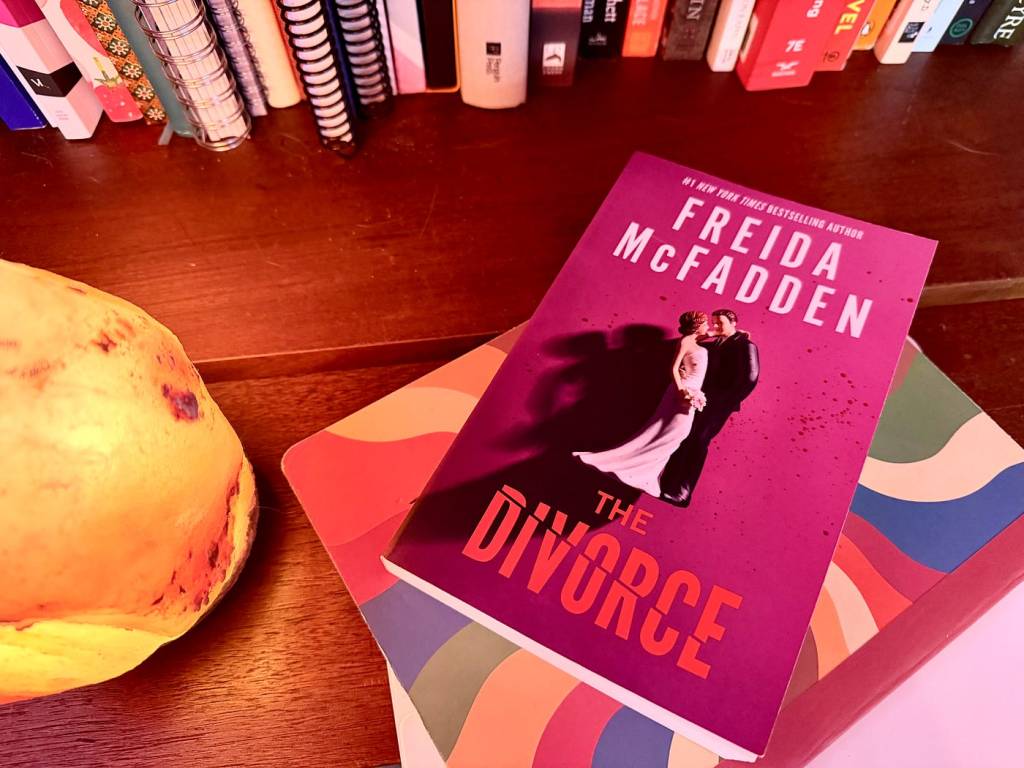
A Review of Frieda McFadden’s Latest Thriller — And Why ARC Readers Say It Reads Like My Own
Disclaimer: If you would like to read The Divorce by Frieda McFadden and do not want spoilers, run away fast. Because this review has them.
I’ll be honest, this is the first Frieda McFadden novel that I’ve read. Many of you are well-versed in her style and plot strategies. McFadden, a.k.a. ‘The Queen of Plot Twists,’ is a staple in every bookstore across America, for crying out loud. She has more novels on display than a dealership has cars. However, I am brand new, so bear with me while I kick the tires.
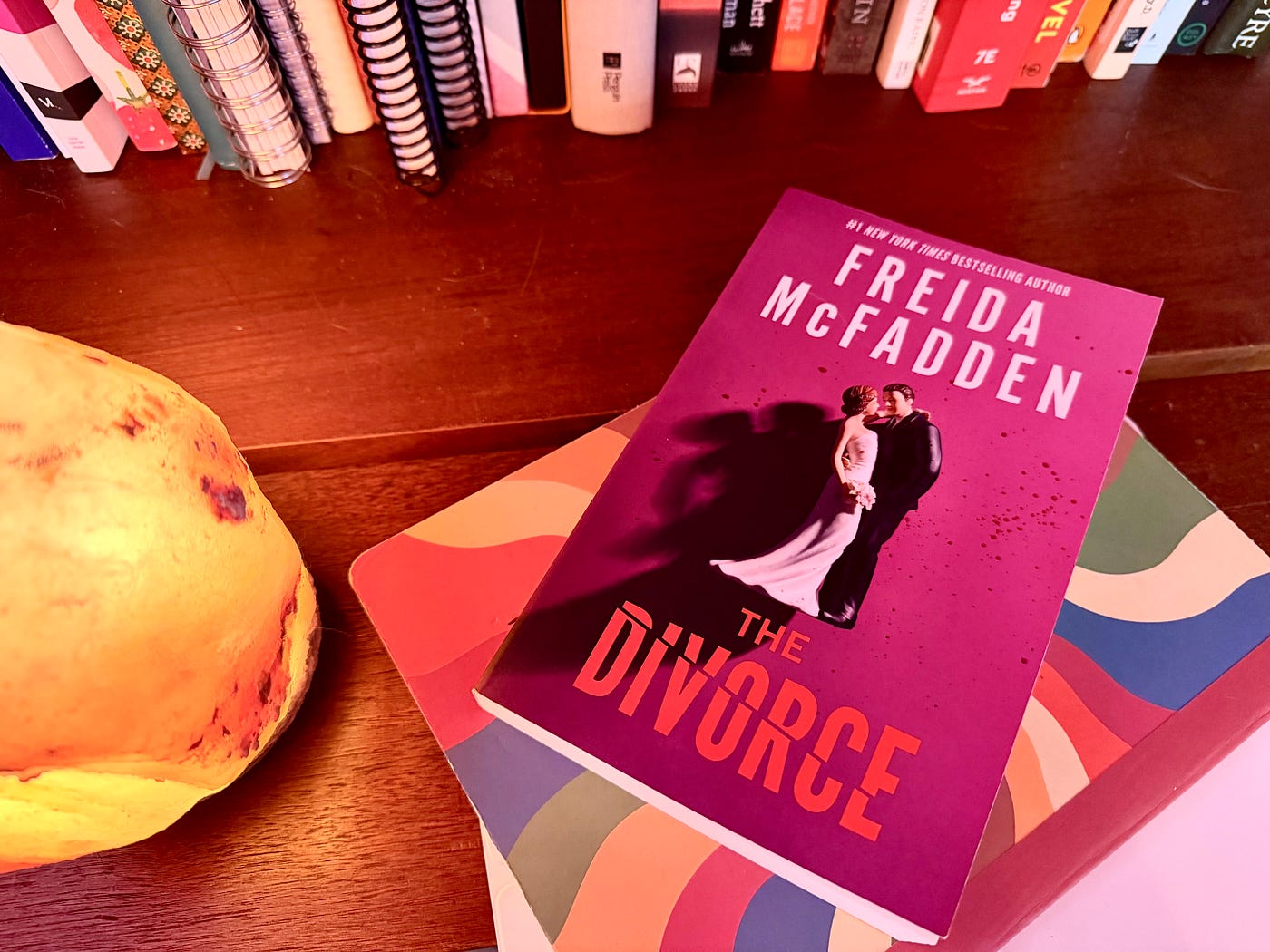
Truthfully, I picked up a copy of The Divorce for one specific reason. I promise this isn’t just a plug — it has context! Through the process of publishing my debut novel, Praise God for Pasties, I heard one resounding comment from my ARC readers. In short, my own novel read very much like a Frieda McFadden. I am honored to be aligned with a New York Times Bestselling Author. That alone is an accomplishment. But it got me thinking — exactly what does my writing share with McFadden’s? And, well, because I am an English teacher, I can’t resist the opportunity to write a book report. (It’s probably got something to do with the Master’s degree in English and Creative Writing. But, hey, we all have our own idea of fun.)
Candidly, I almost ‘divorced’ The Divorce. For the first half of the novel, I found the writing to be rudimentary. The diction and syntax are simplistic. Anyone with a sixth grade reading comprehension could successfully read this book with little issue. McFadden even includes an Author’s Note in the front matter of the novel explaining that her works are written for a wide audience and won’t include adult themes or explicit scenes. Which is fine. However, for my own tastes, I prefer a more advanced use of language (see: Master’s degree above). I don’t say that as a literary snob. My own tastes in literature have always been more advanced, leaning toward the classics, Victorian Gothic literature, and literary fiction rather than contemporary trade books. An easy read can still be a good read, though.
The plot structure builds slowly. I was over 200 pages into the novel when I contemplated listing it as a DNF on Goodreads. It seemed that there wasn’t anything ‘thrilling’ about this psychological thriller. I kept expecting something big to happen; instead, it continued inching in small conflicts that slowly clicked up the plot structure roller coaster. At one point in Part One, I had become so fed up with the main character that I put the book down mid-sentence and left it for days.
In fact, the element that I liked least about this novel was the protagonist, Naomi Roth. Her voice grated on my nerves and her simpering personality was a major turnoff. Excuse my language, but by chapter 39, it seemed like this novel was just one long episode of dumb bitch hour. I couldn’t take Naomi’s blundering and whining any further. This was the moment of my near-divorce with The Divorce.
After a few days of contemplation, I picked it back up. My reasons were two-fold. First, the original question that led to this purchase was still nagging at me. I wanted to know — what about this book, is like my book? Second, my own lectures from teaching high school English haunted me. I’ve spent almost a decade telling my students, “Good literature is supposed to make you feel something. Look for how you feel and you’ll find the theme.”
I felt irritated, confused, lied to, and a bit triggered from my own dealings with divorce. Until I got to Part Two. That’s when the voice changed. That’s when Naomi Roth dropped her mask. The pacing was suddenly cinematic. The writing had depth. The syntax and diction rippled to reflect the inner workings of an unreliable narrator. Naomi Roth was revealed wielding a pair of scissors, not as the protagonist, but as the antagonist. Victimhood shifted to a different, prettier face. And suddenly, the novel became a psychological thriller. As if the squealing tires of plot were about to release the brake and guzzle gas, everything after that continued like a white-hot marathon to the end.
The perspective shifts multiple times like a conversation between the characters, and it all becomes quickly revealed. The plot structure roller coaster is now doing loop-de-loops. And I can barely keep up. I read from Part Two until the end of the book, roughly pages 215 to 351, in one sitting. McFadden earns her title as ‘Queen of Plot Twists,’ with the ever-changing voices of her characters, the constant shifting of blame, and the truth that every conflict has multiple perspectives. Virtue lives in our intentions. Judgement lives in others’ view of the truth. And everyone has the potential to be both hero and villain within a single breath.
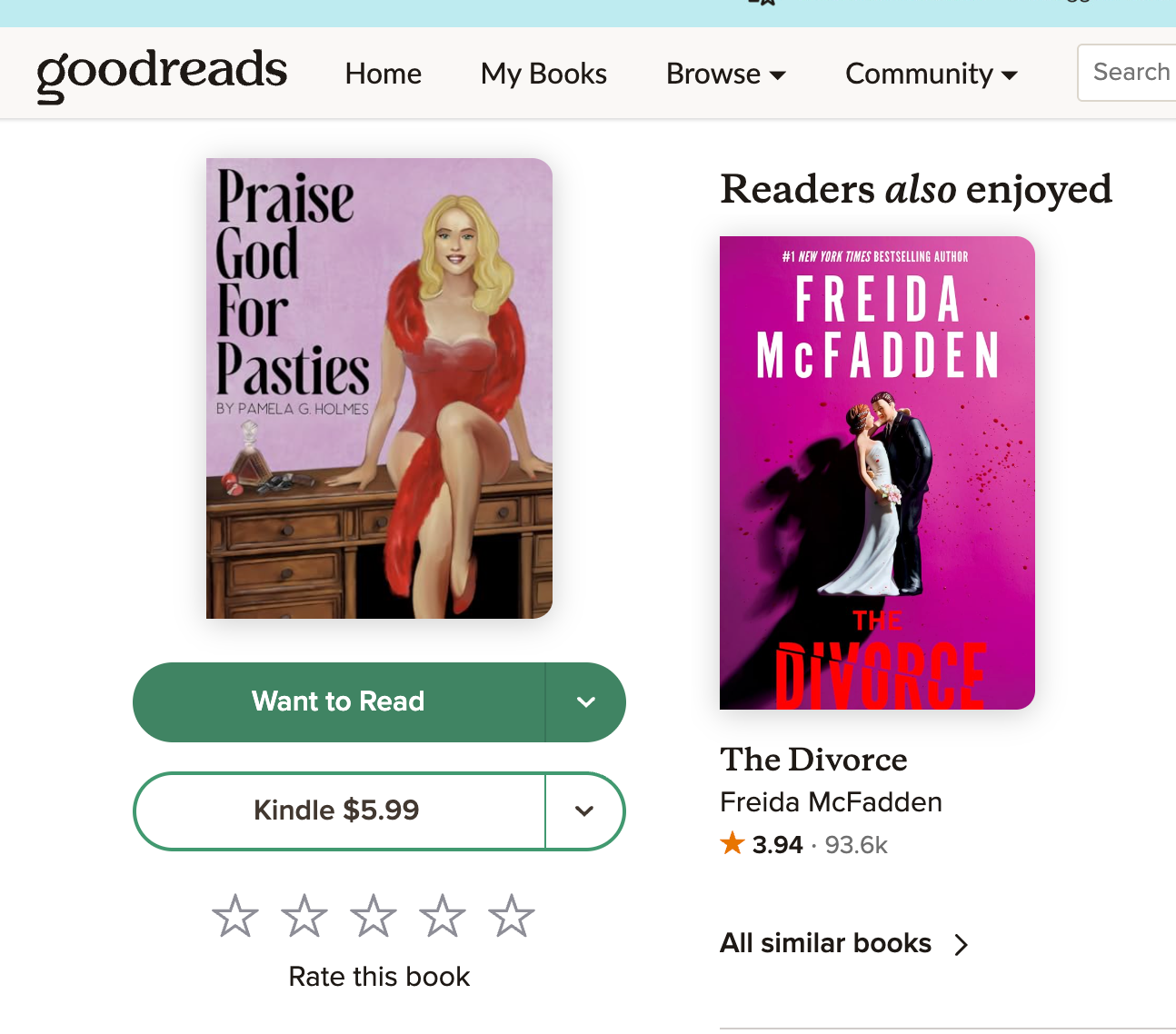
And here’s the plug: I now see why my debut novel, Praise God for Pasties, was aligned with The Divorce by ARC readers. I won’t give it away. But if you’d like to see the comparison for yourself, I’ve included links to both my novel and McFadden’s above. I’d be honored for you to read both and chime in below. Unlike McFadden’s, my novel does come with a Content Advisory. It is written for adults, has uncomfortable themes, lots of cussing, and multiple explicit scenes. It might also make you feel “irritated, confused, lied to, and a bit triggered,” but according to the ARC reviews, it’s “hands down, one of the best pieces of literary fiction…”
Find me online @pamelagwrites.


Leave a comment